Thursday, June 19, 2014

Lead Up to Cameron's Depot

In my last post I spoke in broad terms about the strategic overview leading up to the Valley Campaign of the latter half of 1864.  When we last left off, Chambersburg had just been burned on July 30, and Jubal Early with his Army of the Valley were looking for other opportunities to raid back in to Maryland and Pennsylvania.

On August 7, Phil Sheridan assumed full command of the revitalized Army of the Shenandoah.  He took over from David Hunter, a much older officer (four and a half years older than even Robert E. Lee, in fact) whose combat record was mixed at best.  Initially successful, Hunter's attempts to secure the Valley failed to impress General-in-Chief Ulysses Grant when he showed a great lack of tenacity in resisting Jubal Early's arrival back in June.

The assembly of the new army was already in motion when Sheridan arrived in Harpers Ferry on August 7 to take command.  The VI Corps, commanded by Horatio Wright, had begun to leave Frederick, MD by rail on August 1 bound for Halltown, WV where they would arrive on August 7.  There they camped for two days when on August 10 they started south towards Strasburg.

I put together some crude maps to outline the VI Corps' movements that I've included below.  These are my first rough sketches of more detailed maps I plan to create.  Eventually I'll have a cohesive picture of where all the elements of the Army of the Shenandoah (the VI, XIX, and Cavalry Corps, along with the Army of West Virginia) were at any given time.

Movements of the Union VI Corps the first half of August 1864.  Sheridan initially jumped right in, but after Early received reinforcements, his aggression waned.  My placement of the Battle of Guard Hill is a little off, but that'll be corrected as I refine this project.

As Sheridan was establishing himself near Strasburg, rumors that Confederate reinforcements from Petersburg started and then intensified.  Sheridan was eventually forwarded a dispatch by Henry Halleck written by Ulysses Grant that confirmed the news.

Those Confederate reinforcements (in the form a Kershaw's Division of infantry, and Fitzhugh Lee's Brigade of cavalry, commanded overall by Richard H. Anderson) made it to the Shenandoah River east of Strasburg on August 16.  On that date, Anderson's column was met by Wesley Merritt's Division of Union Cavalry near Front Royal.  The ensuing fight is known most commonly as the Battle of Guard Hill, and was a small Union victory.  Anderson's column wasn't stopped, but a decisive strike by Merritt's cavalry resulted in the capture of about 300 Confederates.

The surge in Confederate numbers compelled Sheridan to withdraw his command to Halltown, West Virginia, near Charles Town, which he would later claim was the only defensible area in this part of the Valley.  Before he left, though, Sheridan had to be sure he fulfilled Grant's orders to his predecessor to leave the Valley an untenable area for the Confederates to maintain a force. 

Orders from Sheridan to his Chief of Cavalry Alfred Torbert to take anything of use to the retreating Union forces, and destroy most everything else.

With that, the Army of the Shenandoah withdrew about 40 miles to the northeast and took up a defensive posture to the west and south of Charles Town.

The federal march back to Charles Town following the arrival of Richard H. Anderson's command from Petersburg.
This puts the Army of the Shenandoah in positions they'll maintain until late in the night of August 21, following an attack by Early's army, which we'll discuss in detail in subsequent posts.

Tuesday, June 10, 2014

Sheridan's Valley Campaign Kicks Off

Through most of the Civil War, the Shenandoah Valley was a place of great annoyance for the Union.  With incredibly productive farmland, pastures, and mills, the Valley made itself a critical supply based for the Confederate Armies, and consequently a major target for the North.  Up until the late summer of 1864, though, any hold the federals had on the Valley was tenuous at best.

Reversals began in 1862 with Jackson's Valley Campaign, a year later another period of occupation was foiled during the Gettysburg Campaign with the Battle of Second Winchester, and again in 1864 federal forces suffered setbacks at New Market and Lynchburg.  I am glossing over some successes by Union forces that did indeed occur, but all in all the Valley remained intact as an area that could feed Confederate soldiers in the field, and thus prolong the war.

The summer of 1864 was when things really started to head south for the Confederacy (pun intended).  Sherman was making steady progress towards Atlanta, access to the Mississippi River had been cut off for over a year, and an exhausted and bloodied Army of Northern Virginia (ANV) had been driven back to Richmond and Petersburg by Ulysses Grant.  With Lee pinned down and unable to maneuver, the time was right for the federals to truly assert themselves in the Valley and deny it to the Confederacy once and for all.

Jubal Early
Not only was the rich agriculture of the Valley a target, but so was the Confederate Army of the Valley commanded by Jubal Early.  This small force made up of crack veterans from the ANV's II Corps had succeeded in clearing the Valley in June 1864, and then went on to threaten Washington, D.C. in July.  Early's army might have even seriously threatened Washington had it not been for a Union delaying action along the Monocacy River, just south of Frederick, MD, on July 9.

By late July, Early's army had fallen back to the safety of the Valley where it remained a threat.  This was proven when the town of Chambersburg, PA was burned on July 30.

Map of actions in the Shenandoah Valley and Maryland, June - July 1864.  Map by Hal Jespersen, www.cwmaps.com.

Phil Sheridan
Now, if you're Ulysses Grant in the late summer of 1864, you don't have the time or patience for this sort of shenanigans.  That is why Grant made a game changing decision to get serious about dealing with Early in the Valley.  In early August Grant appointed Phil Sheridan as commander of a new and revitalized Army of the Shenandoah.  This army would be comprised of the veteran VI Corps from the Army of the Potomac, the less experience XIX Corps from the Army of the Gulf (just in from Louisiana), the Army of West Virginia (sometimes incorrectly called the VIII Corps) under George Crook, and a full three division Cavalry Corps to boot.  This force was to thoroughly execute orders given to Sheridan's predecessor, David Hunter:


"Take all provisions, forage, and stock wanted for the use of your command. Such as cannot be consumed, destroy. It is not desirable that buildings should be destroyed — they should, rather, be protected ; but the people should be informed that so long as an army can subsist among them, recurrences of these raids must be expected, and we are determined to stop them at all hazards."

This is the background for the fight I am currently researching, the Battle of Cameron's Depot.  Stay tuned as the story develops.


Wednesday, May 28, 2014

Battle of Cameron's Depot

Today I circled back on a pet project I started a number of years ago that's sparking my interest once more.  While I was a student at Shepherd University I had the good fortune to meet a local Jefferson County land owner who has been a great friend of mine for the past five years or so.  He owns 200+ acres of some very scenic farmland, and although you'd never know it passing through, battlefield land as well.

The Battle of Cameron's Depot, or Summit Point as it's often called, was one of the opening engagements of the 1864 Valley Campaign.  It was the first sizeable confrontation of Jubal Early's Confederate Army of the Valley and Phil Sheridan's Union Army of the Shenandoah.  The bulk of both armies were within a few miles of one another, and if either commander wanted to really pitch in, it could have gotten very messy.  Early and Sheridan both held back, however, and the day saw a brief but sharp Confederate assault mid-morning, following by a day of brisk skirmishing all up and down the front.

A pretty generic representation of the Battle of Cameron's Depot/Summit Point.

The reason I came across this little known engagement again is I was asked to help out someone looking to interpret the battle for a symposium this summer.  It made me realize I have a lot of unfinished work when it comes to forming a complete picture of the battle, which has hardly anything published about it.  That said, I have a hankering to dive back in.

So, it's to the OR's for me!  It's been too long since I rolled up my sleeves and did some real research.

Wednesday, May 21, 2014

150 Years Ago Today at Massaponax Church

150 years ago today a fairly well known photograph was taken by Timothy O'Sullivan near Massaponax Church, Virginia.   It captures General in Chief Ulysses Grant, Army of the Potomac commander George Gordon Meade, Assistant Secretary of War Charles Dana, and gobs of their staff officers.  This is one of the more remarkable photos taken during the war.  It amazingly captures the buzzing of activity around federal headquarters, and shows the two most important commanders of the eastern theater of the war at this time planning their next move.  Near the center of the image you'll see Grant leaning over Meade's shoulder, as they review a map of the area:


Now, if this photo was a dead horse, by now it would have been beaten into something resembling patties found on the sandwiches of several large U.S. fast food chains.  It's probably been featured in every notable documentary on the Civil War, and certainly the blogosphere is feasting upon this image today for its 150th anniversary.  Rightfully so, I might add, considering what it captures.  But, while it may be a bit redundant to cover this image here on my modest blog, I have a computer, a brain, and an hour of free time, so why not?

So with that, here we go.

As with most images like this, I tend to be less interested in the well known figures shown, and instead get captivated by the details.  One thing that instantly caught my eye was a wagon towards the background.


On it the maltese cross of the V Corps can clearly be seen.  That's pretty cool to be able to ID a piece of equipment to a particular unit, but can we dive a little deeper into the details here?  There's writing below the cross that says "[something] DIV 5th CORPS."  Sadly this background stuff wasn't quite in focus. But dammit I want to figure out which division this wagon belonged to.  I'm weird, I know.

So, how can we figure this out?  Well, I think we can possibly eliminate two of the four divisions that belonged to the V Corps because of a photo we analyzed last week.


In this photo of the AotP's crossing of the Rapidan earlier in May, we saw the probable insignia of either the 2nd of 4th Divisions of the V Corps.  Those two were mostly made up of troops from the discontinued I Corps, hence the circle inside the maltese cross.  If we assume that the wagons of these two divisions had the combined insignia, which I'm not saying we really should, then you could make an argument that the wagon in the Massaponax image was probably from the 1st or 3rd Divisions of the V Corps.  Unfortunately the writing in that image is blurred so we'll never know.

But wait!  Look at the dude standing beside the wagon:

He's wearing a fez!  That means he's zouave!  As far as I know only the 1st Division of the V Corps had zouaves...but no, I don't think that logic will take us anywhere.  You see, one of the regiments of the headquarters guard at this time was the 114th Pennsylvania, a.k.a. Collis' Zouaves that almost certainly would have been nearby at this time.  Here's a photo of them later on in 1864:


Looking elsewhere in the photo, it seems this image wasn't exactly candid:


Many of the staff officers are definitely aware there's a photographer here, and it seems can't help but pose.  My favorite personality, however, doesn't seem to care if he was being made famous:


And for good reason.  Look at the guy towards the top of this zoom.  He was observing, and probably hearing, what Grant and Meade were discussing, oblivious to his surroundings.  I hope this guy ended up having grandkids, because the story of witnessing these two men plan the second half of the Overland Campaign is a tale I sure would have been proud to pass on.

With a view like this, O'Sullivan was sure to take multiple shots of the scene.  Here's one he took in stereoview:


In this version Grant is sitting down on one of the benches, looking like he is quietly thinking while puffing a cigar.  


So, could this second image help us with our wagon mystery from earlier?  Maybe O'Sullivan changed his focus enough to let us read the writing in this one.


Sadly, no.  The wagon train was in motion during this shot, and therefore blurred in the background.  Oh, well.

One last note on this scene is a seemingly random and nondescript soldier caught in the photo.


Amazingly enough, through some detective work much more thorough than mine, in 2011 the authors of Mysteries and Conundrums posted about the identity of this fellow.  It's a pretty neat post, and I highly recommend it.  This man, named Leander Herron, would actually go on to receive a Medal of Honor for actions that occurred in Kansas in 1868, where Herron was posted as a soldier in the 3rd United States Infantry following his Civil War service.

Friday, May 16, 2014

Crossing the Rapidan - Part II

Today I'll look at two more images of the Army of the Potomac's crossing of the Rapidan River in May of 1864.  These two will be scans direct from the original plates, unlike Part I's photo which was a scan of a reprint of the original image.  The images show the AotP's movement south to engage Robert E. Lee's Army of Northern Virginia in a series of brutal battles collectively known as the Overland Campaign.  The day after these photos were taken, the campaign kicked off with the Battle of the Wilderness on May 5, 1864.

Let's start out with a look at some federal artillery in motion:

Photos of artillery batteries all limbered up and ready to go are usually my favorites to look at.  When guiding at Gettysburg, one aspect of the battle that usually blows peoples' minds is the logistics of moving the huge amount of cannon that supported the armies.  Folks unfamiliar with mid-19th Century military logistics (a.k.a. normal people) take for granted that the guns on the battlefield were positioned where they were, without giving much thought as to how they got to or left those positions.  Even in reenacting, you almost always see guns go into action being pulled by Suburbans, not six horses.  So, images like the one above convey the scale and limitations of artillery deployment during the Civil War like nothing else today can.  The only thing that might compare is a reenacting group wealthy enough to afford the equipment, guns, horses, and insurance required to accurately portray a full battery going into action.

Anyway, this photo, taken on May 4, 1864, shows a battery that possibly belonged to the VI Corps crossing the pontoon bridge at Germanna Ford on the Rapidan.

A close inspection in the zoom above shows a gun being pulled on its limber by six horses, followed by a caisson also pulled by six horses.  The background of the photo also shows various battery wagons and other vehicles required for the movement and operation of the guns in battle.  The ground would have shaken when one of these guns rolled by, and you wouldn't want to get in its way.

So, what about the infantry?  In these posts so far we've looked at the quartermaster and artillery branches, but no foot soldiers.  Lucky for us, photographers on site in 1864 took the time to try and capture a federal infantry column on the move:

This amazing image shows federal infantry, probably from the VI Corps, crossing the same bridge pictured above.  It is just simply amazing that we're able to look back 150 years ago with such detail.

This image show what makes me think these troops belong to the VI Corps.  The corps insignia on the wagons is the Greek cross, which was the symbol assigned to the VI Corps early in 1863.


This is one of my favorite images from the war.  You just simply don't see this all that often.  The precision to which we know when and where this photo was taken means that many of the men pictured here would not make it through the next day, or indeed the next several weeks as the Overland Campaign ground on.  I love the motion that these wet plate images convey.  Sure the figures are blurred because of the long exposure time, but you can infer many details from nuances like that. For instance, you'll see that the men on the right side of the zoom are more blurred than on the right side.  That means the column was probably halted when the photographer began this exposure.  Mid-way through the command "Forward, March!" came down the line and the front of the column began to move.  But, by the time the photographer covered back up his lens, the rear of the column to the left hadn't been able to move forward yet, hence their relative clarity.

There's one other detail of this photo that has been the source of wild speculation on my part:

There's this group of riders just above the bridges.  Who could these guys be, cavalry?  I think not.  To me this looks like a general and his staff.  I count thirteen riders in this group, though.  That might seem like a lot of staff for one general to have...but wait a tick:


Here's a photo of Major General John Sedgwick and his staff, taken at the AotP's winter camp near Brandy Station a few months before the Overland Campaign.  I count thirteen officers here, which kinda matches up with the group of mounted men in the Germanna Ford photo.  Also, Sedgwick commanded the VI Corps, whose troops are likely the ones in the photo.  There's no way to prove it, and I'm probably wrong, but I'd like to think that one of those riders is Sedgwick, who would become a martyr to the Union cause just five days after his men crossed at Germanna Ford.


Tuesday, May 13, 2014

Crossing the Rapidan - Part I

The 150th seems to be flying by as we now find ourselves in the middle of the commemorations of the 1864 Overland Campaign.  With my work in Gettysburg I'm sadly missing out on the many living histories and reenactments going on around Fredericksburg.  But, giving tours on the Gettysburg Battlefield is still a great way to spend my weekends, so I shouldn't really be complaining.  This doesn't mean I can't vicariously experience the Overland Campaign 150th, though, and my favorite way to do that is through period photos from the Library of Congress' digital collections.

Three photos that have caught my eye recently are of the Army of the Potomac's crossing of the Rapidan River in early May of 1864 on the eve of the Battle of the Wilderness.  The three I'll focus on today each offer amazing views of what the AotP would have looked like on the move, and provide exquisite detail thanks to the high resolution copies made available by the LoC.

So, let's have a look at our first image:


This shot shows wagons of the V Corps crossing a river.  There are contradicting captions for this image on the LoC website, but I think it shows the V Corps' crossing of the Rapidan in early May of 1864.  I feel confident of the date because of the corps insignia painted on the covers of the wagons.


You'll see that there is a I Corps circle nested into the V Corps Maltese cross insignia.  During the AotP's reorganization in early 1864, the I Corps was discontinued and consolidated into two divisions under John C. Robinson and James S. Wadsworth.  Not wanting to let go of their old insignia, the men of the former I Corps were allowed to wear their old badges, and I reckon to distinguish their wagons from the other V Corps Divisions they utilized the combined symbol.  I haven't found documentation to back up this claim, but would be interested to know how this might have come about.  This to me shows that the spring of 1864 is the earliest date this photo could have been taken.

There are other markings seen on these wagons that are harder to decipher.

On the leftmost wagon in this shot, there's a "3 4" visible.  My first thought was this might belong to a regiment with the numeral 34.  Unfortunately it's not that simple, because the only unit in the AotP at this time numbered 34 was the 34th New York Light Artillery Battery, which was a part of the IX Corps.

All the men pictured seem rather nonchalant.  If I was in the middle of a swift river standing on a temporary pontoon bridge weighted down by several tons of wagons, ammunition, supplies, men, and horse muscle that could break loose any moment, I'd be a little uneasy.  On the bright side, the traffic jam up the road that caused these wagons to pause enabled these men to be photographed, preserving their memory for the use on blogs 150 years later.


In the background we see that there's plenty more wagons coming around the bend and maneuvering down the steep bank to the bridge.  This photo really provides an amazing view into what the seemingly endless trains of men, guns and wagons looked like when an army of 100,000 men was on the move.


Finally, there's one figure in this photo who I'd be very curious to know about.  That's the man sitting next to the dog tent and what looks like a little shack to the right of the bridge on the far bank.  What's this guy's purpose here?  Is the shack his office?  Is he tasked in some way with managing the crossing, maybe keeping track of whose going over and what they have?  I'm not sure, but I can't help imagining his job being something like this:


While he may not of asked each person who crossed five three questions, the name "Bridge of Death" would probably be a good name for the crossing he overlooked in the photo.  While mostly veterans, I think its safe to say the men of the AotP who crossed at Germanna Ford in early May of 1864 could not have imagined the grueling campaign that lay before them.  Inside of two months from when this photo was taken between 50 and 60,000 federal soldiers would be killed, wounded, or captured.

This is just the first installment of photo analysis from the AotP's crossings.  In the next few day's I'll take a look at two more images struck at about the same time, so stay tuned.

Tuesday, April 29, 2014

Start of a New Guiding Season

Well, we're approaching the two month mark since the 2014 guiding season opened for me at Gettysburg National Military Park.  As a part-time Licensed Battlefield Guide, I take the winter off to let the full-timers get the few visitors that come through that time of year.  During the spring, summer and fall I spend my evenings, weekends, or whenever I find time away from my 'real job,' on the battlefield.

I'm already well on my way to meeting my 90 tour minumum, and have met some really nice visitors.  Meeting people is probably my favorite part about being a guide.  I know that if someone is willing to spend $65 on a two-hour tour, they probably have an above average interest in the Civil War, or at least the desire to walk away from their experience with a bit more than what the Visitor Center can provide alone.  This almost always makes for thoughtful dialogue on the field.

Every year I've been guiding there seems to be a different trend in terms of who is visiting the park.  So far this spring I've had a lot more families with young kids than I had last year.  Geographically speaking, most of my tours so far have been folks from west of the Mississippi.  Last spring I remember having mostly New Englanders, and have no idea what may have caused the shift in demographics.  A like scenario is that it's all just dumb luck and coincidence, and I'm probably just reading too much into it.

My most unique tour so far was a gentlemen from Ohio.  I suspected right off the bat it was going to be a memorable tour when one of the ticket supervisors came back to the guide room and said 'I have a guy out here who says he's looking for a guide with no ego...any takers?'  None of the other guides seemed too eager to take it- not because they all have big egos (with some exceptions), but because any special request like that is usually the sign of an odd duck who you may not want to be stuck in the car with for two hours.

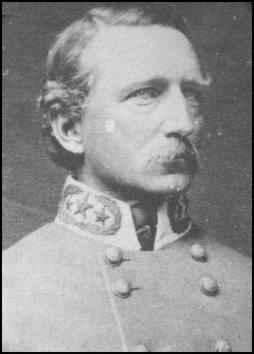
Joseph Kershaw
As it turns out, the gentlemen from Ohio was about as passionate about the history of the battle as anyone I've ever met.  He wanted to focus on Joseph Kershaw's South Carolina Brigade on July 2nd.  Specifically, he wanted wrap his head around how informed Kershaw was when in the mid-late afternoon of July he arrived in position a few hundred yards away from the Peach Orchard, where Dan Sickles' men of the Union III Corps had unexpectedly taken up an advanced position.  It quickly became apparent that he was just as, if not more informed than I was about that particular situation.  All of the accounts I could rattle off the top of my head he was already aware of, humbling me a great deal.

After orienting ourselves in that area of the battlefield, it seems he was looking for somebody to debate with on the various leadership decisions made that afternoon, and I was more than happy to be a contrarian to his views.  I wouldn't call those two hours a tour, more of a friendly debate that turned out to be a lot of fun.  Our conversation made me think about the events the afternoon of July 2nd in a new way, showing that I sometimes have just as much to learn from visitors as they do from me.